
The World’s Most Powerful Spring Calculator
Design Your Spring in Seconds
Enter your dimensions and get engineering-grade specs, stress factors, and instant pricing across 70 trillion possible spring designs.
Torsion Spring Calculator
Torsion spring design software is a powerful tool used for calculating and generating precise torsion spring designs, providing essential data such as the torsion spring rate, maximum safe travel in degrees, maximum spring torque, and a wide range of other critical torsion spring specifications necessary for its proper function. This software also generates a live blueprint along with a comprehensive analysis of your torsion spring.
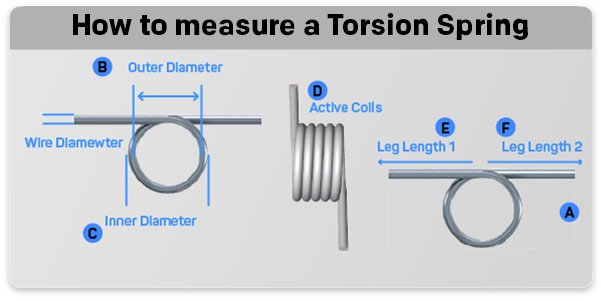
At Acxess Spring, we've simplified the process of designing torsion springs, making it fast and straightforward. Unlike many other torsion spring calculators, our Spring Creator X automatically calculates essential parameters such as torsion spring rate. With our Spring Creator X, all you need to input are a few key physical dimensions of your torsion spring, including the direction of wind, wire diameter, outer diameter, active coils, and material type.
In addition to our Spring Creator X, Acxess Spring specializes in assisting our customers in achieving the perfect torsion spring design. Below, you'll find the design specifications we typically inquire about to ensure we create the most suitable torsion spring for your needs.
What type of environment will your spring have to resist?
This is a pivotal step in the spring design process since your torsion spring must not only meet specific load requirements but also withstand the environmental conditions of its application. For instance, a music wire torsion spring should not be used in a corrosive environment as it is prone to rust. Additionally, consider the temperatures surrounding the spring, whether it is exposed to corrosive elements or moisture, or if it needs to be non-magnetic.
The most common and cost-effective spring material is music wire, ideal for applications with no harsh environmental challenges. If your spring must withstand corrosive environments, we recommend using stainless steel 302 , the most common and economical type of stainless steel. For high-temperature applications, we suggest using 17-7 stainless steel, capable of withstanding temperatures up to 800 degrees Fahrenheit. If non-magnetism is required, stainless steel 316 is the way to go, even though it's only 90% non-magnetic due to the manufacturing process.
What physical parameters will your torsion spring be associated with?
Torsion springs are usually mounted on a shaft or arbor, so the diameter of the shaft is a crucial dimension to consider. Knowing the shaft's diameter is essential to ensure that the torsion spring fits correctly, especially because once torque is applied, the spring's inner diameter shrinks. It's equally important to ensure that the overall outer diameter and legs will fit, so knowing the dimensions of the torsion spring's surroundings is necessary to determine any size constraints.
What amount of torque will be applied to your spring?
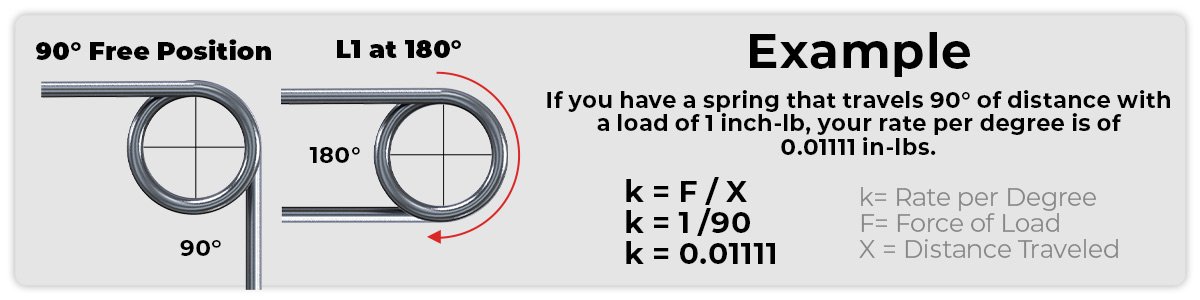
Now, we move on to the calculation aspect of your torsion spring design. Our torsion spring calculator determines your torsion spring's rate, which allows you to calculate the spring's torque at the desired degree of travel. This information helps you confirm whether your required torque is met or if any adjustments are needed to achieve the desired force.
Introducing Spring Creator X
The next evolution in spring design. Generate springs in real time, fine-tune critical dimensions, and explore a completely redesigned engineering experience.
Created by Alfonso Jaramillo Jr - President Acxess Spring
Over 40 Years of Experience in Spring Engineering and Manufacturing